Annual Events · Hawaii
Chinese New Year (Jan/Feb) and Narcissus Festival (Jan/Feb)
A refreshed visitor guide to Chinese New Year (Jan/Feb) and Narcissus Festival (Jan/Feb), with the original event information presented in new wording for the Hawaii Travel Blog.
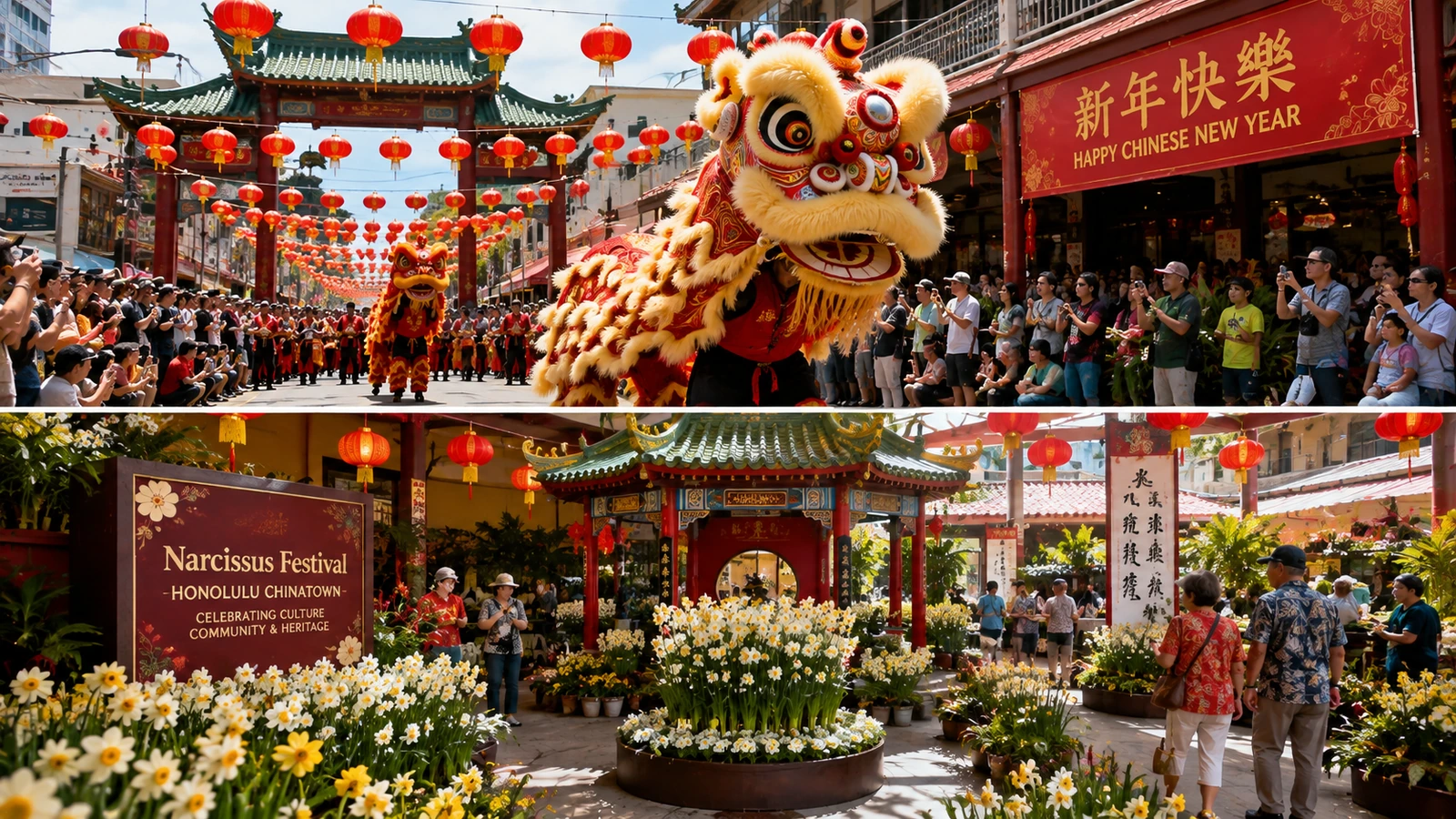
The Chinese New Year and the Narcissus Festival, celebrated in January or February, are vibrant and culturally rich events that draw thousands of visitors annually. Rooted in ancient traditions, these festivals honor heritage, family, and the renewal of life. Both events provide a distinctive glimpse into the cultural tapestry that continues to thrive in communities worldwide.
How Chinese New Year
From a visitor perspective, the Chinese New Year, also known as the Lunar New Year or Spring Festival, dates back over 4,000 years. Rooted in agrarian customs, it marked the end of winter and the beginning of spring, signifying renewal and abundance. According to legend, the festival began as a way to ward off Nian, a mythical beast that terrorized villages. Bright lights, loud noises, and the color red were used to scare Nian away, giving rise to iconic traditions still observed today.
Key Traditions and Customs
From a visitor perspective, chinese New Year is a multi-day celebration filled with symbolic practices:
Reunion Dinners: From a visitor perspective, families gather for lavish feasts on New Year’s Eve, featuring dishes symbolizing prosperity, happiness, and longevity.
Red Envelopes: From a visitor perspective, known as hongbao, red envelopes filled with money are given to children and unmarried adults as blessings for good fortune.
Lion and Dragon Dances: From a visitor perspective, these dynamic performances bring good luck and drive away evil spirits.
Fireworks and Lanterns: From a visitor perspective, displays of pyrotechnics and lanterns illuminate the night, representing hope and new beginnings.
Attendance and Global Reach
The Chinese New Year is celebrated globally, attracting millions of participants and guests each year. In major cities like Hong Kong, Beijing, San Francisco, and Honolulu, parades and cultural events draw crowds ranging from 50,000 to 1 million visitors. Honolulu’s Chinatown hosts one of the largest Chinese New Year celebrations in Hawaii, blending traditional elements with a local Hawaiian flair.
The Narcissus Festival: A Celebration of Beauty and Renewal
From a visitor perspective, coinciding with the Chinese New Year, the Narcissus Festival has its roots in Chinese culture and mythology. The narcissus flower, or water fairy flower, symbolizes good fortune, prosperity, and the coming of spring. This festival was established to honor these virtues and promote cultural awareness.
A Hawaiian Tradition with Chinese Roots
From a visitor perspective, the Narcissus Festival has become a beloved tradition in Hawaii, particularly in Honolulu. Organized by the Chinese Chamber of Commerce of Hawaii, the festival features events that highlight the richness of Chinese culture while embracing the diversity of the islands.
From a visitor perspective, key highlights of the Narcissus Festival include:
The Narcissus Queen Pageant: One of the festival’s most anticipated events, the pageant crowns a young woman who embodies intelligence, cultural knowledge, and poise. The queen and her court serve as cultural ambassadors across the year.
Cultural Exhibits and Workshops: visitors can immerse themselves in Chinese calligraphy, painting, martial arts, and culinary arts.
Flower Showcases: From a visitor perspective, displays of narcissus flowers in elaborate arrangements pay homage to their significance in Chinese traditions.
Attendance and Community Impact
The Narcissus Festival draws approximately 10,000 to 15,000 visitors annually. The event not only preserves Chinese heritage but also strengthens community ties by involving local schools, businesses, and cultural organizations.
A Vibrant Blend of Festivities
In Honolulu, the Chinese New Year and Narcissus Festival often overlap, creating a distinctive synergy of celebrations. Chinatown becomes a bustling hub of activity, with streets adorned in red and gold, the aroma of traditional dishes wafting through the air, and the sounds of gongs and cymbals filling the space.
Directions and Accessibility
Both festivals are centered in Honolulu’s Chinatown, easily accessible by public transportation and within walking distance of major landmarks. Event maps and guides are typically available to ensure travelers can navigate the bustling streets and enjoy the diverse offerings.
Cultural Significance and Future Prospects
The Chinese New Year and Narcissus Festival are more than just celebrations; they are vital to cultural preservation. By presenting traditional practices and fostering intergenerational connections, these events ensure the continued relevance of Chinese heritage in a modern context.
From a visitor perspective, looking ahead, organizers are exploring ways to expand the festivals’ reach through digital platforms, live-streamed events, and interactive online workshops. These initiatives aim to engage a broader audience while maintaining the authenticity and spirit of the celebrations.
Conclusion
From a visitor perspective, the Chinese New Year and Narcissus Festival are testaments to the enduring power of cultural traditions. Through their vibrant displays, heartfelt customs, and communal spirit, they offer a profound reminder of the importance of heritage in a rapidly changing world.
From a visitor perspective, whether you’re a first-time visitor or a long-time participant, these festivals provide an unforgettable experience that resonates far beyond the festivities. From the dazzling lion dances to the delicate beauty of narcissus blooms, the Chinese New Year and Narcissus Festival invite everyone to celebrate life, renewal, and the shared joy of community.