Annual Events · Hawaii
Hula Heritage Dance Festival
Plan for Hula Heritage Dance Festival with cultural context, visitor expectations, and practical Hawaii travel guidance.
Hula as Living Heritage
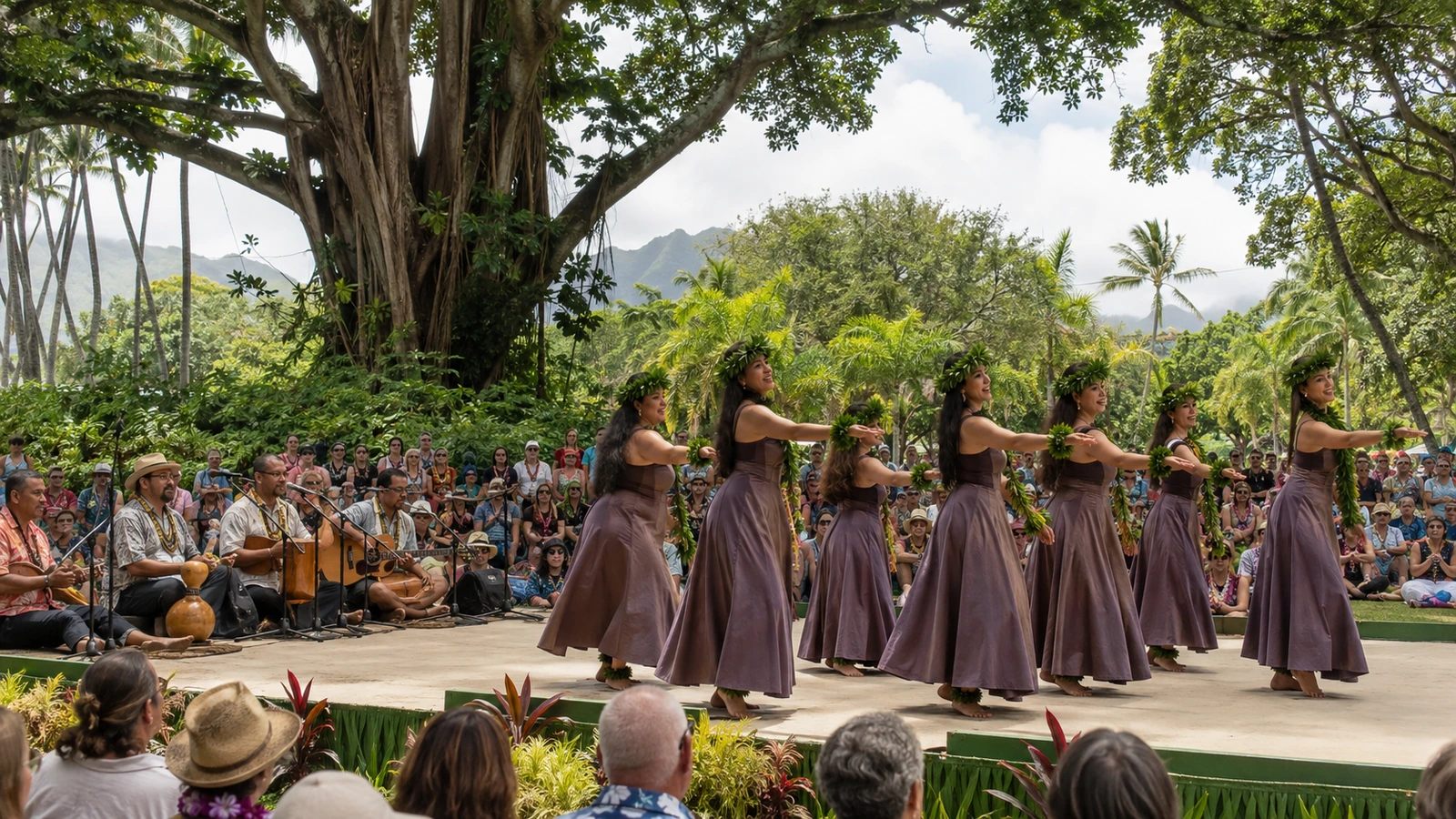
A Hula Heritage Dance Festival offers a chance to see hula in a cultural context shaped by chant, music, language, genealogy, and place. Hula can communicate history and meaning, so the strongest visitor experience comes from watching with attention rather than focusing only on costumes or movement.
What a Festival May Include
Programs may include hula performances, workshops, musicians, cultural demonstrations, artisan booths, and educational presentations. The exact mix depends on the organizer and year.
Festival Etiquette
Follow announcements about photography and recording, remain quiet during formal performances, and avoid blocking aisles or views. Applause and audience participation should follow the tone set by organizers.
Planning Your Visit
Confirm dates, venue access, parking, and ticket requirements before traveling. Arriving early gives you time to understand the program and explore cultural displays before performances begin.
Before You Attend
Programs connected with Hula Heritage Dance Festival may change by year, venue, and organizer. Before traveling specifically for the event, confirm the current schedule, ticket or registration requirements, parking plan, accessibility information, and rules for bags, food, photography, or seating.
Arriving early gives you time to understand the layout, read interpretive material, talk with vendors or volunteers, and settle in without interrupting performances or ceremonies.
Cultural Etiquette and Photography
Approach Hula Heritage Dance Festival as a community and cultural experience rather than only a photo opportunity. Listen to announcements, respect restricted spaces, and ask permission before taking close photographs of performers, cultural practitioners, children, or ceremonial activity.
When music, chant, prayer, protocol, or formal presentations are underway, keep conversations quiet and follow the tone established by hosts. Buying directly from local artists, food vendors, and makers is another practical way to support the event community.
Transportation and Comfort
Plan enough time to reach Hawaiian Islands without rushing. Depending on the venue, parking may be limited and walking from an overflow area may be required. Comfortable shoes, water, sun protection, and a light layer for wind or rain are useful for many Hawaiʻi events.
If the gathering is outdoors, pay attention to heat and weather conditions. Families should identify restrooms, shade, and a meeting point shortly after arriving.
Extend the Experience
After Hula Heritage Dance Festival, continue exploring the history, food, landscapes, and neighborhoods of Hawaii at a comfortable pace. Pairing the event with a nearby museum, historic site, market, scenic stop, or locally owned restaurant can make the day feel more connected to place.
Avoid trying to fit too many distant attractions into the same day. Hawaiʻi travel is usually more rewarding when there is time to learn, observe, and move respectfully through each community.